Research themes
Materials science for energy
Materials science underpins modern energy technology, from solar cells to batteries. The Melamed Lab uses an interdisciplinary skill set to make new materials for a sustainable future. Leveraging solid-state materials science, chemistry, physics, and engineering, we aim to develop energy materials that are earth-abundant, non-toxic, and humanely sourced.
Physical vapor deposition
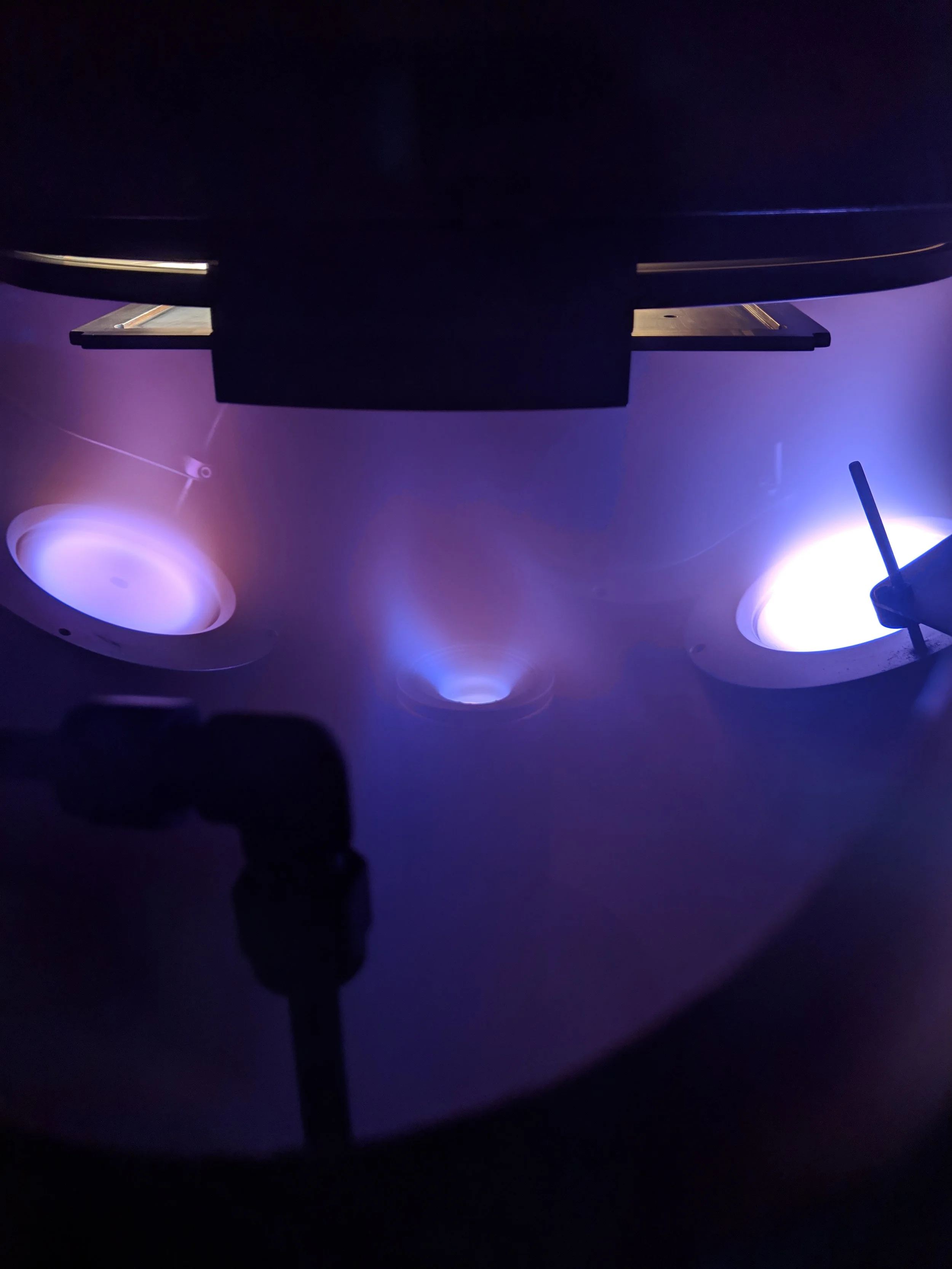
Our primary toolset to study materials chemistry is physical vapor deposition, a method to make solid-state materials with precise control of synthesis energetics, stoichiometry, and morphology. We use combinatorial co-sputtering, sputter epitaxy, and e-beam evaporation to study oxides, nitrides, and chalcogenides for energy applications.
Batteries and ionics
Next-generation battery technology depends on ion motion in solids. To design new battery materials, we need to understand how composition, structure, and defects impact ionics. Our interests include oxide solid-state battery electrolytes, sodium-ion cathodes, thin-film microbatteries, and more.
Some relevant publications:
Cui, T.; Wang, S.; Lee, S.S.; Barks, E.; Cattermull, J., Melamed, C.L. et al. Dendrite initiation and deflection in biaxially stressed solid electrolytes. Nature 2026. https://doi.org/10.1038/s41586-026-10734-x
Wang, S.; Barks, E.; Lin, P.-T.; Xu, X.; Melamed, C.L.; McConohy, G.; Nems̆ák, S.; Chueh, W. C. Effect of H+ Exchange and Surface Impurities on Bulk and Interfacial Electrochemistry of Garnet Solid Electrolytes. Chem. Mater. 2024, 36 (14), 6849–6864. https://doi.org/10.1021/acs.chemmater.4c00738.
McConohy, G.; Xu, X.; Cui, T.; Barks, E.; Wang, S.; Kaeli, E.; Melamed, C.L.; Gu, X. W.; Chueh, W. C. Mechanical Regulation of Lithium Intrusion Probability in Garnet Solid Electrolytes. Nat Energy 2023. https://doi.org/10.1038/s41560-022-01186-4.
Tellekamp, M. B.; Tamboli, A. C.; Ban, C.; Melamed, C. L.; Osella, A. Ternary Nitride Negative Electrode Based Lithium-Ion Battery. US12087948B2, September 10, 2024.
Defects, distortions, and disorder
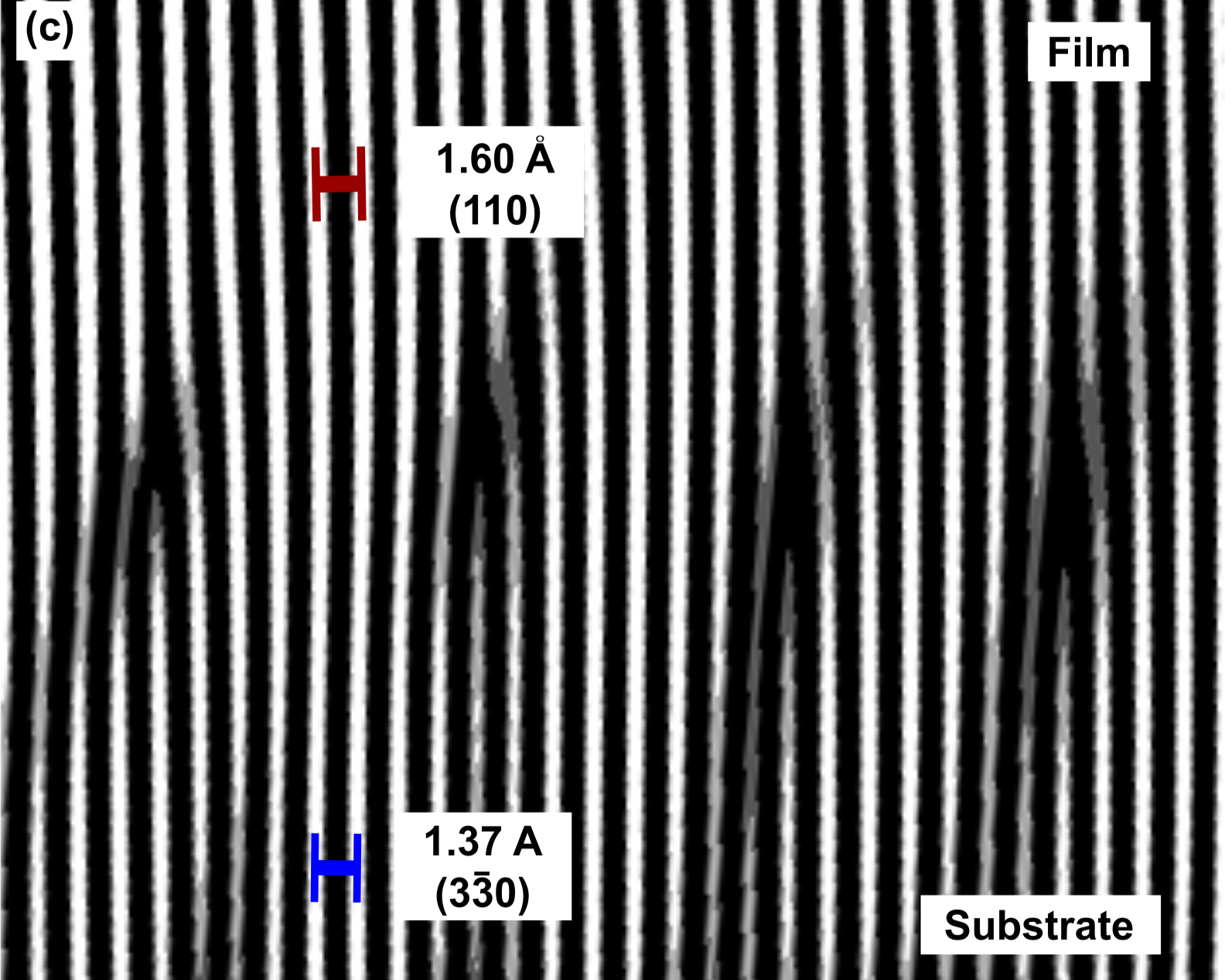
Defects and disorder across length scales are a theme of the Melamed Lab. Incorporation of atomic disorder through elemental substitution and entropy stabilization offer a pathway to replace critical and inhumane elements with better alternatives while maintaining performance. Our research seeks mechanistic understandings of how disorder impacts properties.
Some relevant publications:
Melamed, C. L.; Miller, M. K.; Cordell, J.; Pucurimay, L.; Livingood, A.; Schnepf, R. R.; Pan, J.; Heinselman, K. N.; Vila, F. D.; Mis, A.; Nordlund, D.; Levy-Wendt, B.; Lany, S.; Toberer, E. S.; Christensen, S. T.; Tamboli, A. C. Short-Range Order Tunes Optical Properties in Long-Range Disordered ZnSnN2–ZnO Alloy. Chem. Mater. 2022, 34 (9), 3910–3919. https://doi.org/10.1021/acs.chemmater.1c03938.
Schnepf, R. R.; Cordell, J. J.; Tellekamp, M. B.; Melamed, C. L.; Greenaway, A. L.; Mis, A.; Brennecka, G. L.; Christensen, S.; Tucker, G. J.; Toberer, E. S.; Lany, S.; Tamboli, A. C. Utilizing Site Disorder in the Development of New Energy-Relevant Semiconductors. ACS Energy Lett. 2020, 5 (6), 2027–2041. https://doi.org/10.1021/acsenergylett.0c00576.
Melamed, C. L.; Tellekamp, M. B.; Mangum, J. S.; Perkins, J. D.; Dippo, P.; Toberer, E. S.; Tamboli, A. C. Blue-Green Emission from Epitaxial yet Cation-Disordered ZnGeN2-xOx. Phys. Rev. Mater. 2019, 3 (5), 051602. https://doi.org/10.1103/PhysRevMaterials.3.051602.
High-throughput synthesis
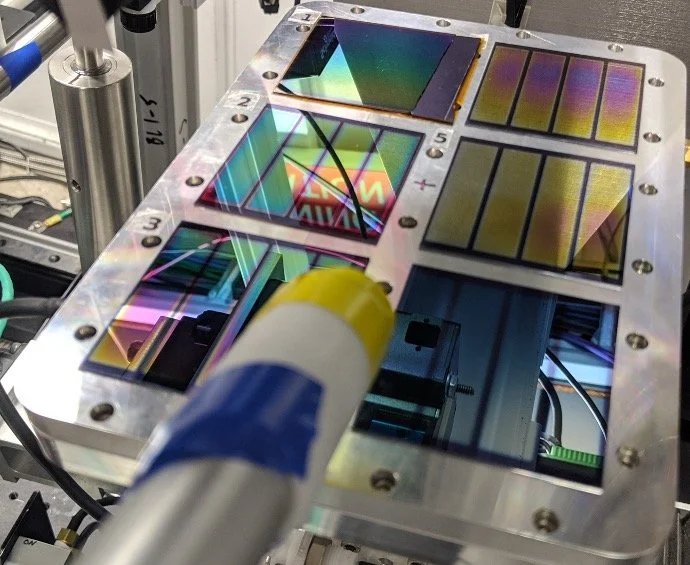
Combinatorial co-sputtering creates a thin-film sample with a composition gradient. This technique enables rapid navigation of compositionally complex phase spaces. The Melamed Lab leverages spatial mapping characterization techniques such as X-ray diffraction, X-ray fluorescence, and Raman spectroscopy to link changing synthetic conditions to structure and defects. We then evaluate performance with techniques such as impedance spectroscopy, battery cycling, and optoelectronic measurements.
Some relevant publications:
Melamed, C. L.; Pan, J.; Mis, A.; Heinselman, K.; Schnepf, R. R.; Woods-Robinson, R.; Cordell, J. J.; Lany, S.; Toberer, E. S.; Tamboli, A. C. Combinatorial Investigation of Structural and Optical Properties of Cation-Disordered ZnGeN2. J. Mater. Chem. C 2020, 8 (26), 8736–8746. https://doi.org/10.1039/D0TC01675F.
Bauers, S. R.; Holder, A.; Sun, W.; Melamed, C. L.; Woods-Robinson, R.; Mangum, J.; Perkins, J.; Tumas, W.; Gorman, B.; Tamboli, A.; Ceder, G.; Lany, S.; Zakutayev, A. Ternary Nitride Semiconductors in the Rocksalt Crystal Structure. Proceedings of the National Academy of Sciences 2019, 116 (30), 14829–14834. https://doi.org/10.1073/pnas.1904926116.

Sustainable futures
We are passionate about rapidly deploying clean energy while considering impacts on people and planet. In addition to studying materials that will lead to a sustainable energy infrastructure, we are always looking for creative ways to integrate life cycle thinking and environmental impact analysis into our research. We welcome collaborations across STEM disciplines as well as in the social sciences and humanities.